New Delhi: The Indian Navy’s Next Generation Missile Vessel (NGMV) programme has received a significant technological boost after Norway’s Kongsberg Maritime signed a contract to supply advanced waterjet propulsion systems for the upcoming warships. The deal is expected to enhance the speed, agility and operational efficiency of India’s future coastal combat fleet.
Advanced propulsion for next-gen warships
Under the agreement, Kongsberg Maritime will supply a total of 18 large “KaMeWa waterjets” for the six missile vessels being constructed under the NGMV programme. Each ship will be fitted with three waterjet units, significantly improving manoeuvrability, acceleration and high-speed performance during naval operations.
The ships are being built at Cochin Shipyard Limited as part of a ₹9,804 crore project approved in March 2023. The first vessel is expected to be delivered by March 2027, with steel-cutting work already underway since December 2024.
What makes waterjet technology important
Waterjet propulsion systems differ from traditional propeller-based mechanisms. Instead of rotating blades, water is drawn in and expelled at high pressure, propelling the vessel forward. This enables higher speeds, quicker turning capability and improved performance in shallow and coastal waters.
The system also reduces noise and vibration levels, making it suitable for stealth-oriented naval missions. Industry officials have described the contract as one of Kongsberg Maritime’s largest waterjet orders to date.
High-speed stealth missile vessels
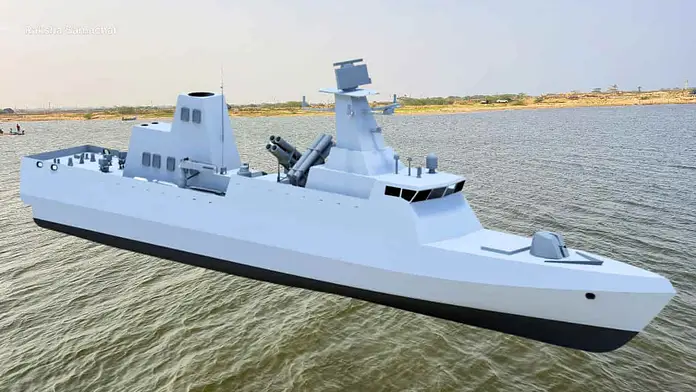
The NGMV ships are designed as next-generation missile corvettes for coastal defence, maritime dominance and protection of offshore assets such as oil and gas platforms. They are also expected to play a key role in rapid strike missions in littoral zones.
The vessels will feature stealth characteristics designed to reduce detection across radar, infrared, acoustic and magnetic signatures, allowing them to operate closer to enemy waters with reduced risk of detection.
Weapons and combat systems
The warships are expected to carry surface-to-surface missile systems, potentially including BrahMos-class missiles, along with short-range air defence systems. They will also be equipped with 76 mm naval guns, air surveillance radars and advanced fire-control systems.

Bharat Electronics Limited has also been contracted to supply an X-band multifunction radar developed by DRDO, further strengthening the indigenous technology integration on board.
Speed, range and capability
With the new propulsion system, the NGMV vessels are expected to achieve speeds of around 33–35 knots, translating to approximately 61–65 km/h, making them among the fastest combat ships in their class.
Each vessel will have a displacement of around 1,500 tonnes, a length of about 90 metres, and a crew capacity of nearly 80 personnel. They will also be capable of operating over long distances of up to 2,800 nautical miles without refuelling.
Engine and industrial collaboration
The ships will be powered by LM2500 gas turbine engines manufactured by GE Aerospace. These engines will be assembled in India through Hindustan Aeronautics Limited (HAL), reflecting a mix of global technology and domestic manufacturing capabilities.
Strengthening India’s maritime edge
The NGMV programme aims to replace older missile craft and corvettes with more advanced, faster and better-armed platforms. Once commissioned, these vessels are expected to significantly enhance the Indian Navy’s rapid strike and coastal defence capabilities.
Kongsberg Maritime has confirmed that deliveries of the waterjet systems will be aligned with the shipbuilding schedule, ensuring seamless integration as construction progresses.